

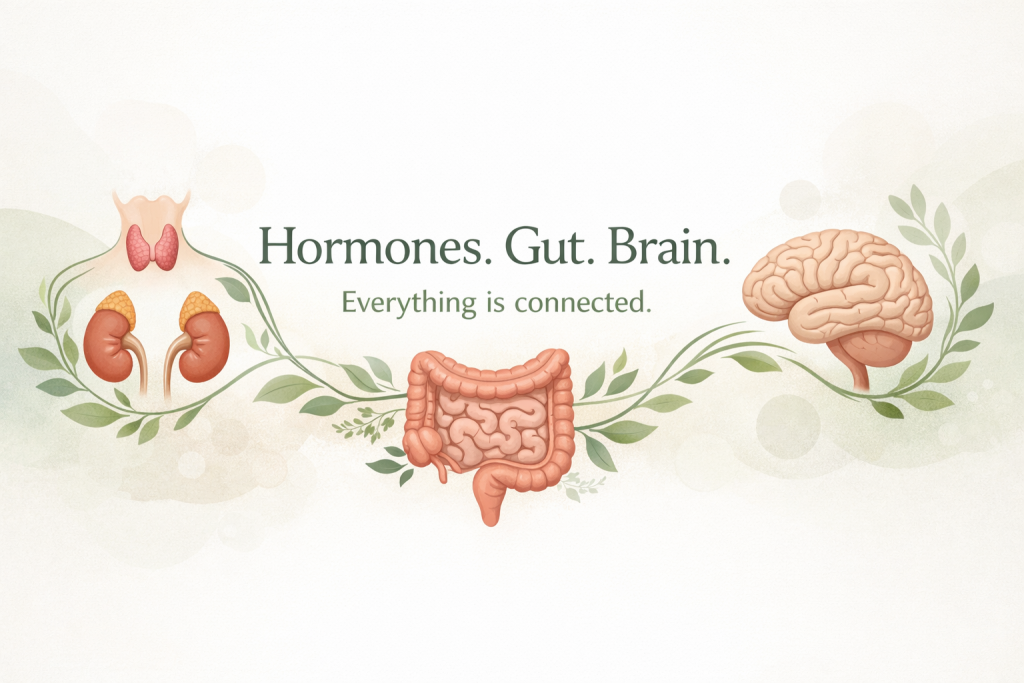
In integrative and naturopathic medicine, we understand that the body does not function in isolated systems. Instead, health depends on communication, balance, and connection. One of the most important—and often overlooked—relationships in the body is the connection between hormones, gut health, and brain function.
If you are experiencing symptoms such as anxiety, digestive issues, fatigue, brain fog, mood swings, weight changes, or hormonal imbalance, these concerns may not be separate problems. They are often interconnected signals from the body asking for deeper support.
Understanding the hormone–gut–brain connection is a powerful step toward long-term healing and whole-body wellness.
The hormone–gut–brain axis refers to the bi-directional communication between the digestive system, the endocrine (hormone) system, and the nervous system. These systems communicate through:
Hormones
Neurotransmitters
Immune signaling
The vagus nerve
When one system becomes dysregulated, the others are often affected as well. This explains why digestive problems can impact mood, stress can disrupt digestion, and hormone imbalances can affect mental clarity and emotional health.
From a naturopathic perspective, symptoms are not random—they are meaningful messages.
The gut is far more than a digestive organ. It plays a central role in:
Hormone metabolism
Immune regulation
Neurotransmitter production
Inflammation control
Your gut microbiome—the trillions of bacteria living in your digestive tract—helps regulate nearly every major system in the body.
Over 90% of serotonin, a neurotransmitter essential for mood, sleep, and emotional balance, is produced in the gut. When gut health is compromised, serotonin production and signaling can be disrupted, contributing to:
Anxiety
Depression
Irritability
Poor sleep
This is why gut health is a cornerstone of mental and emotional wellness.
Certain gut bacteria regulate estrogen metabolism through a collection of microbes known as the estrobolome. When gut bacteria are imbalanced, estrogen may be improperly eliminated and reabsorbed into circulation.
This can contribute to:
PMS
Hormonal acne
Heavy or painful periods
Perimenopause and menopause symptoms
Estrogen dominance
Gut inflammation and dysbiosis can worsen insulin resistance, which affects hormones related to:
Weight regulation
Energy levels
Fertility
PCOS
Stable blood sugar is essential for balanced hormones and brain function.
A healthy gut is necessary for absorbing nutrients like iodine, selenium, zinc, and iron—nutrients critical for thyroid hormone production and conversion. Digestive dysfunction can directly impact thyroid health.
The gut and brain communicate directly through the vagus nerve, a key component of the parasympathetic (rest-and-digest) nervous system. Chronic stress reduces vagal tone, impairing digestion and increasing inflammation.
When stress is ongoing, the brain signals the adrenal glands to release cortisol. While cortisol is helpful in short bursts, chronic elevation can:
Damage gut lining integrity
Alter gut microbiome balance
Suppress digestion
Disrupt hormone production
This creates a feedback loop where stress worsens gut health, gut dysfunction affects hormones, and hormonal imbalance impacts brain function.
Hormones play a vital role in brain health and emotional regulation:
Estrogen supports serotonin and dopamine production
Progesterone has calming, anti-anxiety effects
Cortisol influences memory, focus, and sleep
Thyroid hormones regulate brain energy and cognition
Hormonal imbalance often presents as mental or emotional symptoms, including:
Anxiety
Depression
Brain fog
Insomnia
Irritability
These symptoms are physiological—not psychological—and deserve comprehensive care.
From an integrative medicine perspective, symptoms are connected patterns, not separate diagnoses. For example:
Digestive issues often coexist with anxiety or depression
Hormonal acne may accompany constipation or bloating
Chronic fatigue may be linked to gut inflammation and cortisol imbalance
Treating symptoms in isolation often leads to incomplete or temporary relief. Addressing the root cause leads to sustainable healing.
Nutrition plays a foundational role in gut and hormone health. A supportive diet includes:
Fiber-rich vegetables and fruits
High-quality protein
Healthy fats (omega-3s, olive oil, avocado)
Anti-inflammatory whole foods
Reducing processed foods, refined sugar, and alcohol supports microbiome balance and hormone detoxification.
Healing cannot occur in a constant stress state. Supporting the nervous system helps regulate digestion and hormone signaling. Effective practices include:
Breathwork
Meditation
Gentle movement
Adequate sleep
Time in nature
A regulated nervous system allows the gut to heal and hormones to rebalance.
Key nutrients and supplements may include:
Magnesium
B-complex vitamins
Omega-3 fatty acids
Zinc
Probiotics or prebiotics (when appropriate)
These supports should be personalized based on individual needs.
Every body is unique. Functional testing and detailed health histories allow practitioners to identify:
Gut dysbiosis
Hormone patterns
Nutrient deficiencies
Stress responses
Personalized care addresses the whole person—not just the diagnosis.
Healing is not linear, and it is never one-dimensional. When we support gut health, hormone balance improves. When hormones are regulated, brain health stabilizes. When the nervous system is supported, digestion and detoxification can occur naturally.
This is the foundation of integrative and naturopathic medicine: supporting the body’s innate ability to heal by restoring communication and balance.
Your body is constantly communicating. Symptoms are not failures—they are messages.
By addressing the hormone–gut–brain connection, we move away from symptom suppression and toward lasting wellness.
Hormones. Gut. Brain. Everything is connected.
And when we honor that connection, true healing becomes possible.