

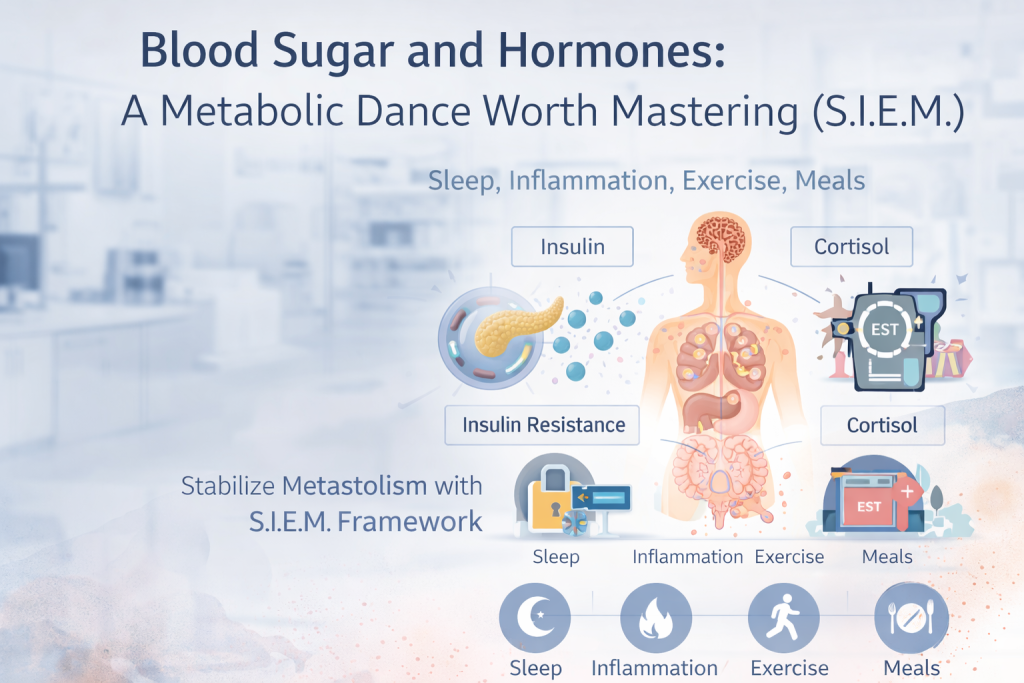
 It’s 3 PM, you finished a satisfying lunch an hour ago, yet you are already fighting the urge to nap. This common energy crash isn’t a lack of willpower; it is a misstep in your body’s metabolic dance. Think of blood sugar as your “liquid energy,” while hormones like insulin serve as the music dictating how your cells move. When the volume gets turned up too high, the rhythm breaks, and your energy plummets.
Fortunately, you can learn to lead this dance rather than stumble through it. Functional health experts utilize the S.I.E.M. framework—Sleep, Inflammation, Exercise, and Meals—to stabilize the stage your metabolism performs on. By adjusting these four pillars, you move from vague awareness to functional literacy, turning that unpredictable afternoon fog into steady, reliable fuel for your day. Framed as Blood Sugar and Hormones: A Metabolic Dance Worth Mastering – S.I.E.M., this guide shows how small shifts support biology definition homeostasis—your body’s ability to maintain steady internal conditions. Classic homeostasis examples include blood glucose balance, body temperature, and pH.
Imagine your cells are neighbors trying to relax, and insulin is the music playing outside. When you eat, the music starts, signaling your cells to open their doors and let the energy (sugar) inside. This system works perfectly until the music plays too loud, for too long. If you constantly flood your system with sugar and frequent snacks, your cells eventually get overwhelmed and put in “earplugs.” This is insulin resistance: plenty of energy is knocking at the door, but the cells refuse to let it in, leaving you feeling exhausted while your blood sugar remains dangerously high.
Food isn’t the only choreographer in this dance, however. Have you ever felt your heart race after a stressful email or during a tense commute? That’s cortisol taking the lead. Your body perceives stress as a physical threat, prompting it to dump stored sugar into your bloodstream for quick energy to “fight or flee.” Since you are likely sitting at a desk rather than running from a predator, that fuel has nowhere to go. This means you can experience a massive blood sugar spike without eating a single bite of candy. If you’ve wondered what is hypermetabolic, think of hypermetabolic activity as a high-burn state triggered by illness, stress, or intense effort; unmanaged, it can magnify swings in glucose and mood.
Recognizing when these partners have missed a step is crucial for regaining control. Your body usually signals this metabolic confusion long before a doctor’s diagnosis. Common warning signs include:
Fixing these missteps starts not in the kitchen, but in the bedroom, where your metabolic stage is reset every night.
Most people think diet is the only lever for controlling blood sugar, but your metabolic stage is actually built while you sleep. Research reveals that just one week of sleep deprivation can temporarily lower your insulin sensitivity to that of a pre-diabetic. When you cut corners on rest, your cells wake up wearing those metaphorical “earplugs,” ignoring insulin’s call to store energy efficiently. Consequently, even a perfectly balanced breakfast can spike your blood sugar higher than normal simply because your body hasn’t recovered from the previous day. Regular, high-quality sleep is also one of the simplest ways for how to regulate your hormones and support steady homeostasis.
Beyond insulin issues, a tired brain struggles to regulate the delicate balance between hunger and fullness. Two specific hormones control this appetite loop: ghrelin , which tells you to eat, and leptin, which signals when you are satisfied. Lack of sleep jams the gas pedal (ghrelin) down while cutting the brake lines (leptin), creating a powerful biological urge for high-calorie carbohydrates. You aren’t lacking willpower when you reach for a donut after a restless night; you are fighting a chemical signal screaming that you are starving.
Regaining control starts with protecting the final hour of your day. Blue light from phones and tablets mimics sunlight, tricking your brain into staying alert and suppressing the deep sleep needed for hormonal repair. By implementing a strict “no-screens” rule sixty minutes before bed, you allow your metabolic stage to reset properly. Once your sleep foundation is solid, your body is finally ready to handle the physical demands of movement and the heat of inflammation.
While sleep resets the stage, movement clears it. Think of your muscles as a powerful vacuum for fuel; when they contract, they pull sugar directly from your bloodstream to power that activity. This effect of exercise on glucose uptake is unique because active muscles can bypass the usual insulin “knock” entirely, opening the doors to your cells automatically. You don’t need to run a marathon to flip this switch; even moderate activity creates a “drain” that lowers blood sugar levels instantly. If you’re asking how do you bring blood sugar levels down or how to lower blood sugar between meals, brief post-meal walks and movement snacks are among the fastest, most accessible answers—practical ways for how to bring sugar level down naturally.
Unfortunately, chronic stress and inactivity can jam the lock. This brings us to the “I” in S.I.E.M.: Inflammation. Imagine trying to unlock your front door, but someone has stuck chewing gum in the keyhole; that describes the relationship between chronic inflammation and blood sugar. When your body is chronically inflamed—whether from stress, processed foods, or illness—your cell receptors become “sticky” and unresponsive, forcing your pancreas to shout louder with more insulin just to get the door open.
Environmental note: endocrine disruption from an endocrine disruptor (for example, BPA, phthalates, or certain pesticides) can also nudge insulin and cortisol off-beat. If you’re wondering what are endocrine disruptors, look for a trusted endocrine disruptors examples resource or a hormone disruptors list to guide practical swaps. Some medications act as endocrine blockers; discuss risks and benefits with your clinician, and aim to reduce endocrine disruptive exposures where feasible.
You can cool this inflammatory flame and activate your muscle vacuums with simple “micro-movements” rather than intense gym sessions. Consider these four ways to improve insulin sensitivity naturally:
Once you have dampened inflammation and activated your muscles, your body becomes a more forgiving vessel. However, even a well-oiled machine can struggle if you pour in the wrong fuel mixture. The final pillar focuses on how to plate your meals for ultimate hormone harmony.
Imagine walking into a grocery store; you wouldn’t pile heavy canned goods on top of fragile eggs in your cart. Your digestion requires similar strategic layering. By eating fiber-rich vegetables first, followed by proteins and fats, and saving starches for last, you create a mesh filter in your gut. This “Fiber-First” sequencing slows down how quickly sugar hits your bloodstream, potentially reducing glucose spikes by up to 30%—even if the meal content stays exactly the same. You don’t always need to cut carbs; often, you just need to give them a chaperone. These strategies also align with foods to balance hormones when paired with whole, minimally processed ingredients.
Even perfectly sequenced meals can fall flat if your cellular machinery is missing its spark plugs. While macronutrients (carbs, fats, proteins) provide the fuel, micronutrients essential for glucose metabolism act as the ignition keys that allow your cells to actually use that energy. Without them, your insulin knocks on the door, but the lock remains jammed. Prioritize these top five powerhouses to lubricate the gears of your metabolism:
These micronutrients are often referred to as hormone balancing vitamins. Some people also consider hormone balancing supplements; women may explore the best female hormone balance supplements—choose evidence-based options with your healthcare provider.
Fueling your body with this level of precision turns a chaotic sugar rush into a steady burn. When you combine these dietary strategies for balancing hormones with the other pillars of sleep, inflammation control, and movement, the music changes from a frantic tempo to a smooth rhythm you can sustain. Combining these elements creates a practical routine.
You are no longer a victim of sudden energy crashes; you are now the choreographer of your metabolism. Recognizing the signs of hormonal imbalance and blood sugar issues gives you the power to lead the dance rather than stumbling through the steps. Instead of relying on willpower alone, use this practical framework to regain control of your body’s rhythm. If you’ve been wondering “how do you balance your hormones” or “how can you balance hormones,” this routine is the day-to-day playbook.
The S.I.E.M. Daily Checklist:
If you have been wondering “how to balance my hormones naturally,” the answer lies in these small, consistent actions rather than drastic changes. You don’t need to be perfect to learn how to rebalance hormones effectively; you just need to keep moving. Start with one “small win” from the list today and turn your metabolic dance into a source of endless energy.
Question: What is the S.I.E.M. framework, and how does it help stabilize blood sugar and hormones? Short answer: S.I.E.M. stands for Sleep, Inflammation, Exercise, and Meals—four pillars that set the “stage” for your metabolism. By improving sleep quality, lowering chronic inflammation, adding regular movement, and sequencing meals intelligently, you make your cells more responsive to insulin and reduce cortisol-driven spikes. The result is fewer energy crashes, steadier mood, and more reliable fuel throughout the day. If you’re asking, “how do you balance your hormones,” these pillars provide a clear path.
Question: Why do I feel an afternoon crash even if I ate a good lunch? Short answer: Insulin and cortisol are likely calling the tune. A carb-heavy or frequently snacked-on meal can push insulin high, and over time your cells may become less responsive (insulin resistance), leaving sugar in the blood and energy low in the cells. Stress can pile on—cortisol can dump stored sugar into your bloodstream even without food, creating another spike-and-crash cycle. Together, they produce hallmark signs like the 3 PM slump, midsection weight gain, and irritability when meals are delayed.
Question: How does sleep affect blood sugar, hunger, and cravings—and what one habit should I start? Short answer: Just a week of poor sleep can temporarily lower insulin sensitivity to pre-diabetic levels, so even balanced meals can spike you higher. Sleep loss also boosts ghrelin (hunger) and lowers leptin (fullness), driving powerful cravings for fast carbs. The simplest starting habit is a strict no-screens rule for the final 60 minutes before bed. Pair that with a protected 7-hour sleep window to let your hormonal “stage” reset overnight.
Question: I don’t have time for the gym. What simple movements can improve insulin sensitivity and cool inflammation? Short answer: Active muscles act like a glucose “vacuum” and can take up sugar without needing insulin. You can tap this with brief, consistent micro-movements: take a 10-minute brisk walk right after meals, do seated “soleus push-ups” (raising and lowering heels) while working, interrupt sitting every 30 minutes (“movement snacks”), and use resistance bands for quick muscle engagement. To help lower stress-driven inflammation, take five slow, deep breaths before meals to nudge cortisol down. These moves are practical answers to how do you bring blood sugar levels down between meals.
Question: How should I build my meals to blunt glucose spikes, and which micronutrients matter most? Short answer: Use “Fiber-First” sequencing: eat fiber-rich veggies first, then protein and fats, and save starches for last. This layers a digestive “mesh” that slows sugar absorption and can reduce spikes by up to 30% without changing what you eat. To keep your cellular “ignition” running, prioritize micronutrients essential for glucose metabolism: magnesium, chromium, vitamin D, zinc, and B-complex vitamins. Combined with sleep, movement, and stress control, this turns roller-coaster spikes into a steady burn. These food-first steps also support those seeking foods to balance hormones.
Question: What’s really behind that 3 PM crash—am I just low on willpower? Short answer: It’s more about hormones than discipline. After frequent carbs or snacks, insulin can stay high and your cells start “tuning it out” (insulin resistance), so sugar lingers in your blood while your cells feel low on fuel. Stress adds gasoline to the fire—cortisol can dump stored sugar into your bloodstream even if you haven’t eaten. The result is the classic afternoon fog, irritability when meals are delayed, and stubborn belly fat despite exercise.
Question: I can’t overhaul my diet right now. What’s the quickest way to blunt meal-time blood sugar spikes? Short answer: Use “Fiber-First” sequencing: eat non-starchy veggies first, then protein and fats, and save starches for last. This layers a digestive “mesh” that slows how fast sugar hits your blood—often cutting spikes by up to 30% without changing what you eat. Pair it with a 10-minute brisk walk right after meals to help muscles vacuum glucose from your bloodstream immediately.
Question: Do tiny movements at my desk actually help insulin and energy? Short answer: Yes. Contracting muscles can take up glucose without needing insulin, acting like a built-in “drain” for blood sugar. Simple micro-movements—seated “soleus push-ups” (raising/lowering your heels), interrupting sitting every 30 minutes, quick resistance-band sets, or a short post-meal walk—cool inflammation, improve insulin sensitivity, and deliver fast, steady energy without a full gym session.
Question: Why does poor sleep spike cravings, and what one change should I make tonight? Short answer: Even a week of short sleep can temporarily lower insulin sensitivity to pre-diabetic levels, so normal meals hit harder. Sleep loss also raises ghrelin (hunger) and lowers leptin (fullness), driving you toward fast carbs. Start with a strict no-screens rule for the last 60 minutes before bed and protect a 7-hour sleep window to reset your hormonal “stage.”
Question: How do stress and inflammation derail hormone balance, and how can I cool them quickly? Short answer: Stress elevates cortisol, signaling your body to release stored sugar for “fight or flight,” creating spikes even without food. Chronic inflammation then “gums up” cell receptors, forcing your pancreas to push more insulin just to get energy inside. To break the cycle, take five slow, deep breaths before meals to nudge cortisol down, and use frequent micro-movements to reduce inflammatory load and restore insulin responsiveness.