

 Building strength during cancer treatment may help support physical function, recovery, and quality of life throughout the cancer journey. Muscle mass in Integrative Oncology may play an important role.
For decades, cancer treatment has focused primarily on one goal: eliminating cancer cells.
Advances in surgery, chemotherapy, radiation therapy, targeted therapies, and immunotherapy have dramatically improved outcomes for many patients. Today, more individuals are surviving cancer than ever before.
Yet survival is no longer the only measure of success.
Patients increasingly want to know how they can maintain their energy, preserve their independence, support recovery, and continue living well throughout treatment and survivorship.
This shift has helped fuel the growth of integrative oncology—a patient-centered approach that combines conventional cancer treatment with evidence-informed strategies designed to support overall health and well-being.
Among the many factors that influence resilience during cancer treatment, one stands out as both critically important and frequently overlooked: muscle mass.
While most discussions focus on tumors, scans, and laboratory values, emerging research suggests that muscle health may significantly influence treatment tolerance, physical function, recovery, and quality of life.
Muscle mass plays a critical role in cancer treatment and recovery. Healthy muscle tissue supports immune function, metabolism, mobility, strength, energy production, and overall resilience. Research increasingly suggests that preserving muscle mass during cancer treatment may help support treatment tolerance, improve recovery, reduce fatigue, and enhance quality of life.
Integrative oncology approaches often address muscle health through personalized nutrition, exercise, sleep optimization, stress management, and supportive lifestyle interventions.
Many people think of muscle primarily as something that helps us move.
In reality, skeletal muscle functions as one of the body’s most important metabolic organs. It influences immune function, blood sugar regulation, hormone signaling, inflammatory processes, and energy production.
Muscle also serves as a reserve system during periods of physiological stress.
When cancer and its treatments place extraordinary demands on the body, muscle tissue provides essential resources that support healing, recovery, and adaptation.
This means that maintaining muscle mass is not simply a fitness goal—it is a health goal.
| Area of Health | Why Muscle Matters |
|---|---|
| Treatment Tolerance | Greater physical reserves may help patients better tolerate therapy. |
| Recovery | Muscle provides resources needed for tissue repair and healing. |
| Energy Levels | Healthy muscle supports metabolic efficiency and physical endurance. |
| Mobility | Preserved strength helps maintain independence and daily function. |
| Immune Function | Skeletal muscle contributes to immune system regulation. |
| Quality of Life | Strength and function are closely linked to overall well-being. |
Cancer can affect the body in ways that extend far beyond the tumor itself.
The disease may alter metabolism and increase inflammatory activity. At the same time, treatments such as chemotherapy, radiation therapy, surgery, and hormonal therapies can affect appetite, activity levels, and nutritional status.
The result is often a gradual decline in muscle mass and strength.
In some cases, patients may maintain a stable body weight while losing muscle and gaining fat. This means that traditional measurements such as weight or BMI do not always tell the full story.
| Challenge | Potential Impact |
| Reduced Appetite | Lower calorie and protein intake |
| Nausea | Difficulty maintaining adequate nutrition |
| Fatigue | Reduced physical activity |
| Inflammation | Increased muscle protein breakdown |
| Digestive Issues | Reduced nutrient absorption |
| Emotional Stress | Changes in eating and movement habits |
For many patients, these changes occur gradually and may go unnoticed until physical function begins to decline.
Muscle loss can occur even when body weight remains stable. This is why body composition is often more informative than weight alone when evaluating physical resilience during cancer treatment.
One of the strengths of integrative oncology is its focus on addressing multiple factors that influence health simultaneously.
Rather than relying on a single intervention, integrative oncology recognizes that nutrition, movement, recovery, and medical support work together to influence outcomes.
| Pillar | Goal | Examples |
| Nutrition | Support muscle repair and maintenance | Protein-rich foods, oncology nutrition counseling |
| Movement | Preserve strength and function | Resistance training, walking, rehabilitation |
| Recovery | Optimize healing and adaptation | Sleep, stress reduction, restorative practices |
| Medical Support | Individualized care planning | Oncology guidance, symptom management, survivorship support |
Nutrition remains one of the most powerful tools available to support muscle health.
Cancer treatment can make eating difficult due to nausea, changes in taste, digestive symptoms, fatigue, or reduced appetite. Over time, inadequate protein intake may accelerate muscle loss.
Protein supplies the amino acids required for tissue repair, immune function, muscle maintenance, and recovery.
| Food | Nutritional Benefit |
| Salmon | High-quality protein plus omega-3 fatty acids |
| Eggs | Complete protein source |
| Greek Yogurt | Easy-to-consume protein-rich option |
| Chicken Breast | Lean, highly bioavailable protein |
| Lentils | Plant-based protein and fiber |
| Tofu | Versatile vegetarian protein source |
| Cottage Cheese | Slow-digesting protein |
| Protein Smoothies | Helpful when appetite is reduced |
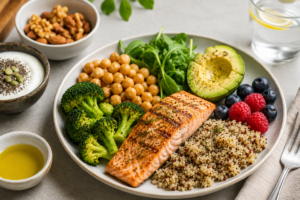 Nutrition provides the building blocks needed to preserve muscle tissue and support recovery.
The role of exercise in cancer care has changed dramatically over the last decade.
Historically, patients were often encouraged to rest extensively during treatment. Today, a growing body of evidence supports appropriately prescribed physical activity as a valuable component of comprehensive cancer care.
| Exercise Type | Potential Benefits |
| Resistance Training | Preserves muscle mass and strength |
| Walking | Improves endurance and daily function |
| Cycling | Supports cardiovascular fitness |
| Swimming | Low-impact conditioning |
| Physical Therapy | Personalized rehabilitation |
| Tai Chi | Balance and mindful movement |
For many patients, exercise is no longer viewed simply as a wellness activity. It is increasingly recognized as an important component of supportive cancer care.
While nutrition and exercise receive significant attention, recovery is equally important.
The body performs much of its repair work during periods of rest.
Quality sleep supports:
Stress management also plays an important role.
Chronic stress may contribute to fatigue, inflammation, and reduced quality of life. Integrative approaches such as mindfulness, counseling, social support, nature exposure, and relaxation techniques may help patients navigate treatment more effectively.

Recovery involves more than physical healing. Sleep, stress management, and meaningful social connections contribute to resilience throughout the cancer journey.
The importance of muscle preservation extends well beyond active treatment.
| Phase | Primary Focus |
| Newly Diagnosed | Establish baseline nutrition and physical function |
| Active Treatment | Preserve muscle mass and manage side effects |
| Recovery | Rebuild strength and endurance |
| Survivorship | Support healthy aging and long-term wellness |
| Advanced Cancer Care | Maintain function, comfort, and quality of life |
Cancer treatment will always focus on controlling disease.
However, the future of oncology is increasingly focused on helping patients maintain strength, independence, resilience, and quality of life throughout the entire cancer journey.
Muscle mass may not receive the same attention as scan results or laboratory values, but it represents something fundamentally important: the body’s capacity to adapt, recover, and remain strong in the face of challenge.
Integrative oncology recognizes that treating cancer and supporting the whole person are not competing priorities—they are complementary goals.
As research continues to evolve, preserving muscle health may become one of the most important and actionable strategies available to support patients during treatment, recovery, and survivorship.
Yes. Cancer itself and treatments such as chemotherapy, radiation therapy, surgery, and hormonal therapies can contribute to muscle loss through changes in metabolism, appetite, activity levels, and inflammation.
Muscle mass supports treatment tolerance, recovery, immune function, mobility, strength, and overall quality of life.
For many patients, appropriately prescribed exercise is both safe and beneficial. Patients should consult their healthcare team before beginning any exercise program.
Protein-rich foods such as fish, poultry, eggs, dairy products, legumes, tofu, and protein supplements may help support muscle maintenance.
Sarcopenia refers to the loss of muscle mass and strength. It may occur during cancer treatment due to inflammation, inactivity, and inadequate nutrition.
Integrative oncology combines conventional cancer treatment with nutrition counseling, exercise programs, sleep optimization, stress management, and lifestyle medicine strategies that support overall resilience and recovery.
This article was reviewed by professionals dedicated to evidence-informed integrative oncology and supportive cancer care. Our mission is to help patients and families navigate the cancer journey through education, lifestyle medicine, nutrition, movement, and whole-person wellness strategies that complement conventional treatment.