

Weight loss is not just about “eating less and moving more.” For most people, weight loss is multi‑factorial, shaped by metabolism, hormones, sleep, stress, gut health, and environment working together. When those systems are out of balance, even strict diets and exercise plans may not produce sustainable results.
This article explains why weight loss is multi‑factorial, how metabolic health affects your weight, and what a metabolic weight‑loss approach looks like in real life—especially in an integrative medical setting.
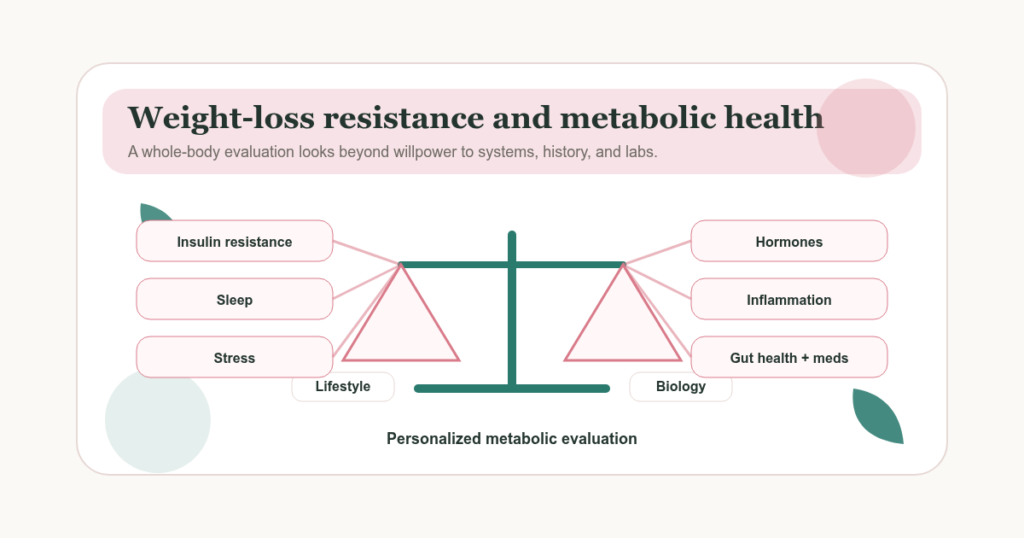
Multi‑factorial weight loss means your weight is influenced by many factors at the same time, not just calories in and calories out. Biology, lifestyle, medications, and environment all change how your body uses, stores, and burns energy.
Two people can follow the same diet and workout plan and get very different results. Their hormone levels, sleep patterns, stress load, muscle mass, and past dieting history create different metabolic conditions. A multi‑factorial approach looks at those conditions first, then designs a plan around how your body actually works.
“Eat less, move more” is simple advice, but it ignores the complexity of metabolic health. It assumes everyone’s body responds the same way to a calorie deficit.
In reality:
Insulin resistance can make it easier to store fat and harder to mobilize it for fuel.
Low thyroid function can reduce metabolic rate, energy, and motivation.
Chronic stress and poor sleep can drive cravings, overeating, and fatigue.
Certain medications and health conditions can change appetite and energy use.
If these issues are not addressed, you may see early weight loss followed by plateaus, regain, or burnout. That does not mean you failed. It means the plan didn’t match your physiology.
Hormones act as the body’s messaging system and heavily influence weight regulation.
Insulin: Manages blood sugar and fat storage. Persistent insulin resistance makes it harder to burn stored fat and easier to gain weight around the abdomen.
Thyroid hormones: Help set your metabolic “speed.” When thyroid function is low, metabolism slows, energy drops, and weight loss can stall.
Cortisol: The main stress hormone. Chronic high cortisol levels can increase abdominal fat, disrupt sleep, and destabilize blood sugar.
Sex hormones: Changes in estrogen, progesterone, and testosterone—especially around perimenopause, menopause, or andropause—can affect fat distribution, muscle mass, mood, and cravings.
A metabolic weight‑loss plan assesses these hormones and works to improve how they function, rather than assuming everyone’s metabolism is the same.
Sleep and circadian rhythm are core pieces of metabolic health, not optional add‑ons.
Poor sleep can:
Increase hunger signals and reduce satiety signals.
Decrease insulin sensitivity, making it easier to store energy as fat.
Reduce daytime energy, leading to less movement and more cravings for quick‑energy foods.
If your weight‑loss plan ignores sleep, it may unintentionally fight against your physiology. A multi‑factorial approach emphasizes consistent sleep timing, adequate sleep duration, and healthy nighttime habits as part of your weight‑loss strategy.
Chronic stress keeps the nervous system on high alert. When your body feels unsafe or overwhelmed, it often responds by conserving energy and seeking quick comfort.
Common patterns include:
Emotional eating in the evening or after stressful events.
Binge–restrict cycles that leave you feeling out of control.
Using food or alcohol to regulate mood and numb discomfort.
These behaviors are coping strategies, not moral failures. Addressing stress physiology, nervous system regulation, and emotional patterns around food is essential if you want sustainable, multi‑factorial weight loss.
Your gut and immune system also influence weight and metabolic health.
Imbalanced gut bacteria and chronic GI symptoms can affect how you absorb nutrients and regulate blood sugar.
Low‑grade inflammation can contribute to fatigue, joint pain, and brain fog, making it harder to move consistently and plan meals.
Nutrient gaps—such as low protein intake or deficiencies in key vitamins and minerals—can impair energy production and muscle maintenance.
A comprehensive plan may include gut‑focused nutrition, digestive support, and ensuring adequate protein and nutrient intake to support metabolic health.
Muscle tissue is metabolically active and critical for long‑term weight management.
More muscle mass increases the amount of energy you burn at rest.
Strength training improves insulin sensitivity and helps preserve lean mass during weight loss.
Everyday movement—walking, standing, fidgeting, taking stairs—adds up and improves blood sugar control throughout the day.
Rapid, crash dieting that leads to significant muscle loss can slow your metabolism and increase the risk of weight regain. A multi‑factorial approach deliberately protects and builds muscle while you reduce body fat.
Your weight is also shaped by the environment you live in and the beliefs you’ve learned over time.
Food environment: The foods that are readily available at home, work, and in your community strongly influence what you actually eat.
Habits and routines: Small, repeated behaviors—like what you grab when you’re tired, stressed, or in a hurry—drive long‑term outcomes.
Mindset and shame: If you’ve internalized the message that weight is only about discipline, it’s easy to blame yourself when traditional plans fail. That shame can make it harder to seek help or stick with change.
Recognizing these factors is not about making excuses. It’s about designing a plan that matches your real life instead of an idealized version of it.
Metabolic weight loss focuses on improving the underlying systems that control energy use, appetite, and body composition. The goal is not just to change the number on the scale, but to improve health markers and quality of life.
A metabolic weight‑loss approach typically aims to:
Improve insulin sensitivity and blood sugar stability.
Preserve or increase lean muscle mass.
Reduce chronic inflammation and address gut or hormonal imbalances.
Support consistent sleep and stress regulation.
Create sustainable nutrition and movement habits that fit your life.
You may see changes in lab markers, energy, mood, and symptoms before dramatic changes in weight. That’s a sign that your metabolism is shifting in a healthier direction.
An integrative medical practice views weight through the lens of whole‑body systems rather than isolated symptoms. Instead of handing you a generic meal plan, a multi‑factorial, metabolic program may:
Take a detailed history of your symptoms, health conditions, medications, and previous weight‑loss attempts.
Assess metabolic health with labs and, when appropriate, tools like continuous glucose monitoring.
Evaluate hormones, gut function, sleep patterns, stress load, and lifestyle habits that may be driving weight‑loss resistance.
Build a phased plan that combines nutrition, movement, sleep, stress regulation, and targeted therapies, so you are not relying on willpower alone.
If you feel like you have “tried everything” and still struggle with your weight, a multi‑factorial metabolic assessment can help you understand why—and give you a clear, personalized path forward.
If you’re ready to move beyond one‑size‑fits‑all diets and understand the real reasons your body is holding on to weight, consider scheduling a metabolic health evaluation with an integrative physician. By looking at your hormones, metabolism, sleep, stress, and gut health together, you can create a weight‑loss plan that finally matches how your body works.
Healthy eating is important, but weight can also be influenced by insulin resistance, sleep disruption, stress, hormone changes, medications, inflammation, gut health, menopause, muscle mass, alcohol intake, and changes in activity level. A metabolic evaluation can help identify which factors may be contributing.
Yes. Insulin resistance can contribute to higher blood sugar levels, increased hunger, cravings, and weight gain in some people. It is not the only cause of weight-loss resistance, but it is one factor clinicians may evaluate when weight changes do not match a patient’s efforts.
Thyroid hormones, insulin, cortisol, estrogen, progesterone, testosterone, and menopause-related hormone changes may all influence weight, appetite, energy, sleep, and metabolism. Hormones should be evaluated in context with symptoms, labs, medications, lifestyle, and medical history.
Yes. Poor sleep can affect hunger signals, cravings, stress hormones, blood sugar regulation, recovery, and energy levels. If poor sleep occurs with weight gain, fatigue, cravings, or abnormal labs, it may be part of a broader metabolic pattern worth evaluating.
A clinician may consider A1C, fasting glucose, fasting insulin when appropriate, lipid panel, triglycerides, HDL cholesterol, thyroid markers, liver enzymes, inflammatory markers, nutrient markers, hormone testing, blood pressure, and waist measurement. The right testing plan depends on symptoms, history, medications, and risk factors.
No. Hormones can contribute, but weight-loss resistance may also involve insulin resistance, sleep, stress, inflammation, gut health, medications, nutrition patterns, reduced muscle mass, activity changes, menopause, and other medical factors. A whole-body evaluation is often more useful than focusing on one cause.
Consider seeing a clinician if weight gain is unexplained, persistent, sudden, associated with fatigue, brain fog, cravings, sleep changes, menstrual or menopause symptoms, swelling, abnormal labs, medication changes, or if weight-loss efforts are not matching expected results.
SIE Medical evaluates weight-loss resistance through a metabolic health lens, looking at blood sugar, hormones, inflammation, gut health, sleep, stress, medications, nutrition, lifestyle, and related lab patterns. The goal is to identify possible contributors and create a personalized plan based on your health history and goals.