

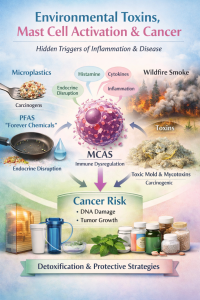
Modern life exposes us to an unprecedented level of environmental toxins. Microplastics, PFAS “forever chemicals,” wildfire smoke, and climate-driven mold are no longer isolated hazards—they are chronic exposures with measurable biological consequences. Increasingly, research shows these toxins converge on one immune mechanism: mast cell activation.
Mast Cell Activation Syndrome (MCAS) is characterized by inappropriate, excessive release of inflammatory mediators such as histamine, tryptase, cytokines, and prostaglandins. What is now emerging is a bidirectional relationship between MCAS and cancer, driven in large part by environmental toxic burden.
Understanding how these exposures activate mast cells—and how mast cell dysregulation promotes carcinogenesis—may be one of the most important breakthroughs in chronic inflammatory disease and cancer prevention.
Current estimates suggest humans ingest up to 5 grams of plastic per week, roughly equivalent to a credit card. Microplastics are now detected in:
Drinking water (bottled and tap)
Seafood and produce
Human blood, lungs, placenta, and breast milk
Microplastics and nanoplastics are biologically active. Research indicates they can:
Directly stimulate mast cell degranulation
Disrupt intestinal tight junctions, increasing immune activation
Induce oxidative stress and mitochondrial dysfunction
For individuals with MCAS, microplastics may represent a constant immune trigger, preventing mast cells from returning to baseline and driving chronic inflammation.
Microplastics act as vectors for:
PFAS
Heavy metals
Pesticides
Polycyclic aromatic hydrocar (PAHs)
These compounds are known or suspected carcinogens. Once internalized, microplastics may deliver toxic payloads directly into tissues, contributing to DNA damage, immune dysregulation, and tumor-promoting environments.
Per- and polyfluoroalkyl substances (PFAS) are used in non-stick cookware, stain-resistant fabrics, food packaging, and firefighting foams. Despite regulatory efforts, PFAS exposure remains widespread.
Many “PFOA-free” products contain replacement PFAS compounds, which:
Persist in the body for years
Accumulate in blood and organs
Have similar toxicological profiles to legacy PFAS
Studies link PFAS exposure to increased risk of:
Kidney cancer
Testicular cancer
Immune suppression
Endocrine disruption
PFAS have been shown to:
Trigger mast cell activation
Alter immune signaling pathways
Exacerbate inflammatory and allergic conditions
This dual action—simultaneously promoting MCAS and carcinogenesis—makes PFAS uniquely harmful.
Not all filters are effective. Research supports:
Granular activated carbon (GAC)
Reverse osmosis (RO) systems
These systems significantly reduce PFAS levels in drinking water, lowering cumulative exposure and inflammatory load.
Wildfires are increasing in frequency and severity due to climate change. Smoke exposure is now a recurring health threat, even far from fire zones.
Wildfire smoke contains:
PM2.5 particulate matter
Volatile organic compounds (VOCs)
Carcinogenic PAHs
Heavy metals from burned structures
Wildfire smoke can cause:
Acute mast cell degranulation
Respiratory inflammation
Cardiovascular stress
Neurological symptoms such as brain fog and headaches
For individuals with MCAS, wildfire smoke is often a rapid and severe trigger.
Effective mitigation includes:
Medical-grade HEPA air purifiers
Properly fitted N95 or P100 respirators
Sealing indoor environments during high AQI events
Supporting antioxidant and anti-inflammatory pathways
Rising humidity, flooding, and warming temperatures have increased mold growth worldwide. Mold exposure is increasingly recognized as a systemic inflammatory and carcinogenic risk, not merely a respiratory issue.
Certain molds produce mycotoxins that:
Activate mast cells at extremely low doses
Disrupt mitochondrial and immune function
Impair detoxification pathways
Are classified or suspected carcinogens
Mycotoxins can:
Persist in tissues
Recirculate via enterohepatic pathways
Cause ongoing immune activation long after exposure ends
For individuals with MCAS, mold exposure is often associated with severe, refractory symptoms and increased cancer risk.
Reducing environmental exposure is one of the most effective ways to lower mast cell activation and carcinogenic risk.
Galectin-3 is involved in:
Chronic inflammation
Fibrosis
Tumor progression
Certain dietary fibers and bioactive compounds may:
Modulate Galectin-3 signaling
Bind toxins in the gastrointestinal tract
Reduce immune activation
These strategies are supportive and should be personalized.
Infrared and traditional sauna use may:
Enhance elimination of certain toxins through sweat
Improve circulation and lymphatic flow
Reduce inflammatory signaling
However, heat can activate mast cells in some individuals, so sauna therapy must be approached cautiously in MCAS.
In select, medically supervised cases, clinicians may consider:
Selective therapeutic apheresis
Advanced detoxification protocols
Targeted immune modulation
These interventions are reserved for individuals with severe toxic burden and refractory disease.
Chronic mast cell activation contributes to:
Angiogenesis
Tissue remodeling
Immune evasion
Tumor-supportive inflammation
Conversely, cancer and its treatments can further destabilize mast cells, worsening systemic symptoms. This bidirectional relationship highlights the importance of early intervention and exposure reduction.
Every protective strategy—reducing PFAS exposure, filtering air and water, addressing mold, supporting detoxification, and stabilizing mast cells—has the potential to reduce toxic burden and inflammatory load.
The connection between MCAS and cancer is no longer theoretical. It is environmental, immunological, and actionable.
By addressing environmental triggers and supporting the body’s ability to return to baseline, we can shift health trajectories toward resilience rather than chronic disease.