

SIE Medical · Atlanta & Austin
Labs in range but still exhausted, foggy, or off? Hormone symptoms rarely live in one lab value. At SIE Medical, Dr. Williford evaluates thyroid, adrenals, sex hormones, blood sugar, gut, and environmental load together, not one number in isolation.
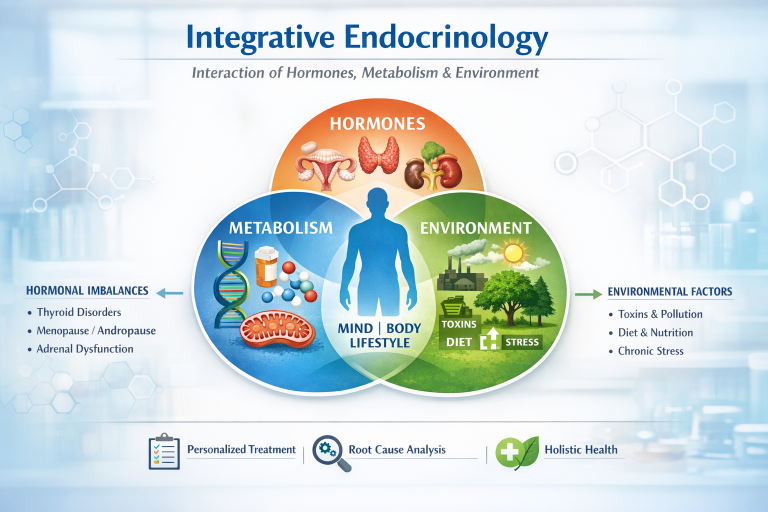
Integrative endocrinology blends conventional endocrinology with naturopathic and holistic hormone medicine to address the full hormonal picture, sex hormones, thyroid, adrenal, metabolic, and reproductive health, alongside gut health, environmental exposures, and lifestyle factors. The goal is to find what is creating hormonal imbalance rather than managing symptoms with a single number on a lab report. At SIE Medical, this means a personalized evaluation that treats hormones as a system connected to everything else in the body.
This approach works well for patients experiencing fatigue, cycle changes, thyroid symptoms, weight resistance, low libido, sleep disruption, hot flashes, or hormone symptoms tangled with gut or blood-sugar issues.
Hypothyroid symptoms with "normal" TSH · adrenal burnout and chronic stress load · estrogen and progesterone shifts in perimenopause · low testosterone concerns · insulin resistance · lingering symptoms despite labs that look acceptable to other providers.
| Condition | Description | Common Symptoms |
|---|---|---|
| Hypothyroidism | Thyroid does not produce enough hormone | Weight gain, fatigue, depression, cold sensitivity, dry or thinning hair |
| Hyperthyroidism | Thyroid produces excess hormone | Weight loss, rapid heartbeat, anxiety, irritability, sweating, insomnia |
| Adrenal Dysfunction | Imbalance in cortisol production and stress response | Chronic fatigue, poor stress tolerance, brain fog, sleep issues, salt or sugar cravings |
| Sex Hormone Imbalances | Irregular levels of estrogen, progesterone, or testosterone | Irregular cycles, mood swings, low libido, weight changes, acne, hair thinning |
| Insulin Resistance | Reduced sensitivity to insulin affecting blood sugar regulation | Post-meal fatigue, sugar cravings, abdominal weight gain, difficulty losing weight |
You are welcome to reach out. A Discovery Call is a brief, no-obligation conversation to see if a hormone evaluation at SIE Medical is a good fit for your situation.
Contact Us / Discovery Call →Atlanta (404) 236-6234 · Austin (512) 788-9941 · Telehealth nationwide
At SIE Medical, integrative endocrinology is organized around the whole hormonal system, not a single lab value. Evaluation includes:
Your gut microbiome is a frontline factor in hormone regulation. When the microbiome is compromised, it affects estrogen detox pathways, thyroid and adrenal support, and blood sugar regulation. Gut health is consistently one of the highest-yield areas in a whole-body hormone evaluation.
Hormones like cortisol, thyroid hormones, and insulin are sensitive to external stressors. EDCs mimic or block hormone receptors. Heavy metals interfere with thyroid hormone synthesis. These exposures can alter hormone signaling, disrupt circadian rhythms, and contribute to chronic patterns of fatigue, weight gain, and mood instability. At SIE Medical, environmental load is part of every hormonal evaluation, not an afterthought.
| Tool | Function |
|---|---|
| Hormone Testing | Maps cortisol, estrogen, progesterone, testosterone, and other hormone rhythms across the day |
| Full Thyroid Panel | TSH, Free T3, Free T4, reverse T3, and thyroid antibody assessment |
| Stool Testing | Assesses microbiome health, inflammation, and estrogen metabolism capacity |
| Wearable Technology | Tracks sleep, glucose patterns, and circadian alignment in real time |
| Nutrigenomics | Aligns diet and supplementation with detox and hormone-related gene variants |
What is holistic hormone health?
Holistic hormone health evaluates the full endocrine system rather than looking at one hormone in isolation. It considers sex hormones, thyroid, adrenal function, blood sugar, stress, sleep, nutrition, metabolic health, lifestyle, and environmental exposures, all together, because they all interact.
What are common signs of hormone imbalance?
Fatigue, weight changes, mood swings, hot flashes, night sweats, brain fog, low libido, sleep problems, irregular cycles, anxiety, hair changes, and shifts in energy or metabolism. These symptoms often overlap with thyroid, adrenal, and gut-related patterns.
What is BHRT and is it right for everyone?
BHRT (bioidentical hormone replacement therapy) uses hormones structurally similar to those the body naturally produces. It may be considered for some patients based on symptoms, labs, health history, and risk factors. It is not appropriate for everyone and should be personalized and medically supervised, never cookie-cutter.
How are thyroid and adrenal health connected to hormone symptoms?
Thyroid and adrenal function influence energy, mood, metabolism, sleep, weight, and stress tolerance. Hormone symptoms often involve multiple systems, not just estrogen or progesterone. A full picture evaluation usually reveals patterns that a single-hormone focus misses.
Can gut health affect hormones?
Yes. Gut health influences estrogen metabolism, inflammation, nutrient absorption, detoxification, and immune signaling. Digestive health is consistently part of a whole-body hormone evaluation at SIE Medical.
What testing is used for hormone imbalance?
Testing may include blood work, full thyroid panels, sex hormone testing, adrenal and cortisol evaluation, metabolic markers, nutrient testing, and other labs based on the patient's symptoms and goals. The panel is individualized, not templated.
NMD, MS, RD/LD · Fellowship in Environmental Medicine · Member, AAEM · Terrain Certified Practitioner, MTIH
Dr. Williford completed her NMD at Southwest College of Naturopathic Medicine and holds a Master of Science in Nutritional Science. She is a Registered and Licensed Dietitian, placing her at the intersection of naturopathic medicine, clinical nutrition, metabolic health, and environmental medicine.
Her approach is individualized rather than protocol-driven. No templated care plans. The evaluation is built around what the findings show for that patient, in that body, at that time. Most patients have already seen multiple providers and been told their labs are normal. Finding the functional picture behind those results is where the work begins.
A Discovery Call is a short, no-obligation conversation to see if SIE Medical is a good fit for your situation. No pressure.
Contact Us / Discovery CallAtlanta (404) 236-6234 · Austin (512) 788-9941
3193 Howell Mill Rd NW, Suite 306
Atlanta, GA 30327
(404) 236-6234
| Mon – Fri | 9:30 AM – 5:00 PM |
| Sat – Sun | Closed |
3315 Ranch Rd. S. 620, Suite 100
Austin, TX 78738
(512) 788-9941
Telehealth available for appropriate patients depending on state licensing and clinical fit.
Educational content only. Not medical advice. Individual results vary. Please consult your healthcare provider before making changes to your health plan.

Webpages and Blog:
The Link Between Weight Gain and Hormonal Imbalance
Chronic Inflammation Symptoms: Why It’s Often the End Result—and What Testing Reveals
Cortisol Production and Seasonal Changes: What You Need to Know – S.I.E.M. (siemedical.com)
Hashimoto’s Thyroiditis and Gluten | Should I Cut It Out? – S.I.E.M.
How to Lose Weight with Hashimoto’s – S.I.E.M.
Endocrine Disruptors and Natural Alternatives to Hormone Therapy
The Role of Sleep with Hormone Regulation and Metabolic Health
A Naturopathic, root cause and integrative endocrinology approach allows us to identify other impacts to your hormones and body’s health. We treat the Whole You not just one body system.

We start by understanding your life history, level of health and your body’s processes as they are today.

We create an individualized plan of health that takes into account, not just your fatigue, but any other issues you may be experiencing.

We prescribe a combination of lifestyle changes, dietary and nutritional changes, as well as potentially Bio-identical Hormones, as indicated, for a more natural approach being identical to you and your body’s metabolic terrain.

With our Integrative and Holistic approach, you work with a Naturopathic Medical Doctor to provide a more comprehensive experience.

Dr. Williford’s practice focuses on integrative functional wellness to treat metabolic dysfunction, digestive health, hormone imbalance, longevity/anti-aging, and chronic disease including cancer support and Alzheimer’s. She earned her Master’s degree in Nutritional Science, Magna Cum Laude, from Texas Tech University. She earned her Doctor of Naturopathic Medicine degree (N.M.D.) from Southwest College of Naturopathic Medicine, one of only four accredited, four-year naturopathic medical schools in the United States.
“I never understood how the body’s systems worked together, especially with Hormones. This approach has helped me return to normal and Thrive again.”
– S.I.E.Medical Patient
