

Atlanta · Austin · Telehealth
Your oncologist treats the cancer. Many people still need a second layer of care for energy, nutrition, digestion, sleep, inflammation, and the whole terrain of recovery. At SIE Medical, integrative oncology and naturopathic oncology are built to run with conventional treatment, not instead of it.
Care is led by integrative physicians in Atlanta and Austin, with telehealth when appropriate. We use a metabolic, systems-based lens so support fits your diagnosis, treatment calendar, and daily life.


Quick answer: Integrative oncology is whole-person, evidence-informed care used alongside standard cancer treatment. It focuses on quality of life, symptom burden, metabolic resilience, and day-to-day function during active treatment and survivorship. It is not an alternative that replaces chemotherapy, radiation, surgery, or immunotherapy.
Over 80% of people with cancer choose natural and supportive therapies alongside conventional treatment. At SIE Medical, that support is physician-led, safety-first, and coordinated in spirit with your oncology plan.
That means visits that map your oncology plan, then support nutrition, energy, gut comfort, sleep, stress physiology, hormones when relevant, and environmental load as context, not as a single identity. Functional medicine tools may appear inside this frame. They sit under integrative, physician-led care.
Related reading: What happens in a consultation · Terrain approach to cancer · Breast cancer support · Systems-based terrain medicine
A short overview of the metabolic approach to integrative and naturopathic oncology at SIE Medical, how care supports the whole person alongside conventional treatment.
Prefer to watch on YouTube: Open video · Related: Immune support during cancer care
People often reach out when treatment is working on the tumor, but daily life still feels hard, or when treatment has ended and recovery is slower than expected. Support can meet you at diagnosis, during active treatment, or in post-treatment survivorship.
During active treatment
Fatigue, nausea, gut changes, appetite, sleep, neuropathy support conversations, and pacing around infusion weeks.
Survivorship
Rebuilding energy, metabolic health, hormones after therapy, and a steadier baseline when treatment is done.
Prevention and risk context
When family history or metabolic risk is part of the story, and you want thoughtful lifestyle and terrain planning, not fear-based protocols.
Quick answer: A first visit maps your oncology story and treatment timeline, how your days actually feel, nutrition and metabolic terrain, gut and absorption, energy and recovery, relevant hormones, medications and supplements for safety, and clear priorities for the next stretch of care. You leave with a more coherent plan, not a sales script.
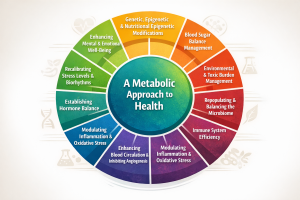
Quick answer: Metabolic cancer support looks at the internal conditions that shape resilience: how you make energy, handle inflammation, process nutrients, sleep, and recover between treatment weeks. Environment and exposures can add load. Evaluation still starts with you, your body and history first.
Deeper hub: Terrain medicine · Mitochondrial health · Environmental medicine · Terrain oncology peer page
Plans are individualized. Depending on your case, support may include coordination in spirit with conventional therapies, metabolic nutrition strategies, carefully chosen supplements or botanicals, lifestyle medicine, physical medicine when appropriate, and mind-body pacing. Less can be more during hard treatment weeks.
Wondering if SIE Medical is a fit?
A Discovery Call is a calm place to ask. No obligation. This does not replace your oncologist.
Articles are grouped so you can move from foundations into energy, metabolism, gut, hormones, and environment. Care is designed to run with your oncology team.
Begin with the visit itself, then foundations.
Telehealth may be available depending on state rules and clinical fit.
No. It is designed to work alongside conventional cancer treatment.
No. In an integrative setting, naturopathic oncology supports the person receiving or recovering from standard care. Refusing recommended oncology treatment without medical guidance is a different, higher-risk path.
Not as a default. Safety, interactions, appetite, labs, and oncology timing come first.
Supportive integrative care can apply across many diagnoses and stages. Recommendations always depend on your oncology plan and individual status. Many women come for breast cancer and hormonally influenced care; the same terrain lens applies more broadly when it is a clinical fit.
Clinician leadership
Naturopathic physician with a focus on integrative and metabolic care, including cancer support, environmental medicine, hormones, and chronic illness. Fellowship in Environmental Medicine; member of the American Academy of Environmental Medicine (AAEM). Training includes the Metabolic Approach to Cancer master class with Dr. Nasha Winters. Care is individualized rather than protocol-only.
The practice also includes conventional physician collaboration on staff so patients benefit from an integrative, physician-led model.
If you want whole-person support with your oncology team, in treatment or in survivorship, you are welcome to reach out. No pressure.
Austin (512) 788-9941 · Atlanta (404) 236-6234
Educational content only. Not medical advice and not a substitute for your oncology team. Individual results vary. SIE Medical does not provide legal or expert-witness services.
 Kimberly Williford, MS,RD,LD,NMD is a native Texan, Licensed Naturopathic Doctor and Registered Dietitian. She has dedicated her entire career to studying and helping patients to heal and balance metabolic dysfunction to help chronically ill patients while optimizing vitality and performance.
She earned her undergraduate degree from The University of Texas at Austin. She earned her Master’s degree in Nutritional Science, Magna Cum Laude, from Texas Tech University and completed internship at Texas Tech Health Science Center in Lubbock, Texas. After graduate school her focus was on children born with metabolic disorders later becoming an intensive care dietitian. She also worked extensively with the geriatric population both in the hospital and extended care facilities.
As a desire to treat the cause of disease rather than symptoms she furthered her education by attending medical school at Southwest College of Naturopathic Medicine, one of only four accredited, four-year naturopathic medical schools in the United States where she earned her Doctor of Naturopathic Medicine degree (NMD). She completed a two year general and functional medicine residence, which focused on metabolic testing in Atlanta, Georgia. She served as a consultant in functional test interpretation for Metametrix/Genova laboratories reviewing test results with doctors from all over the country.
She has completed Board Certification fellowship training in anti-aging and restorative medicine with the American Academy of Anti-Aging and Rejuvenation Medicine. She studied environmental medicine with Dr. Bill Rea, founder of Environmental Health Center Dallas, and Dr. Walter Crinnion, an expert in environmental medicine for over thirty years. An unexpected cancer diagnosis and surgical menopause led to an increased passion in understanding hormones and optimizing the immune function. This was a natural fit for completing Master Class training in the Metabolic Approach to Cancer with Dr. Nasha Winters ND, FABNO and author of The Metabolic Approach to Cancer.
Dr. Williford’s practice focuses on integrative functional wellness to help environmental toxicity, cancer support, metabolic dysfunction, hormone imbalance, longevity/optimal aging, cognitive decline and chronic disease. Treatment is individual as each person is unique rather than being a protocol. Focus is on the person as a whole rather than a diagnosis. She has been working with patients, both in and out of the hospital for over 20 years to help them achieve optimal health.
.