

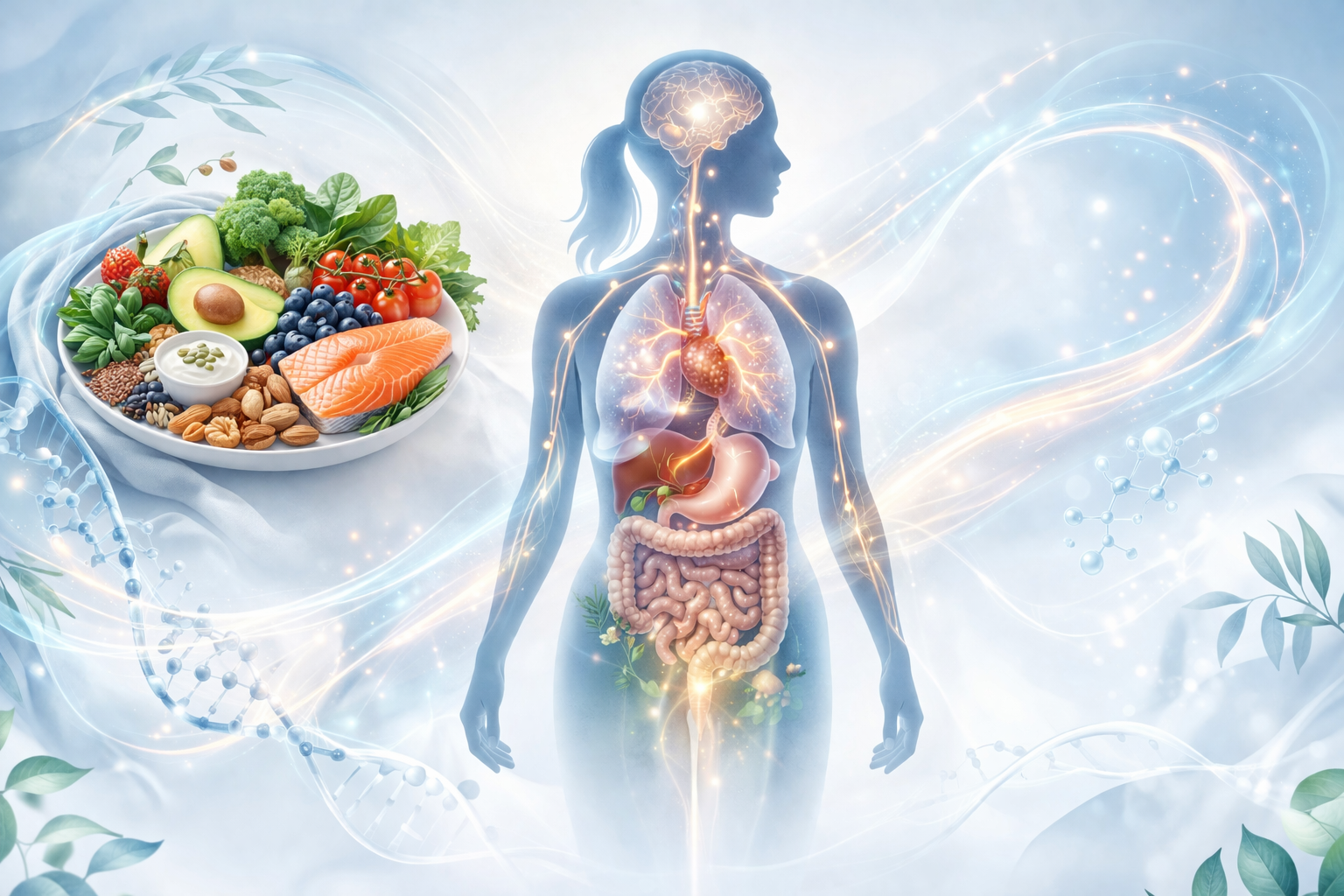
 Nutrition supports most processes of the body including healing.
Introduction
Functional and integrative nutrition view food as both fuel and information—a set of inputs that communicate with your cells, hormones, and genes to shape how your body functions and heals. Rather than applying one-size-fits-all dietary advice, this approach focuses on root causes, personalization, and systems biology, using nutrition strategically to restore balance and optimize performance. Functional and Integrative Nutrition is core to our approach to helping your metabolism and mitochondria assist in the healing process.
Incorporating Functional and Integrative Nutrition into your lifestyle can significantly improve your overall health and well-being.
Functional nutrition is a science-based, individualized approach that identifies and addresses the underlying drivers of imbalance—such as inflammation, blood sugar dysregulation, micronutrient deficiencies, and gut dysfunction.
Integrative nutrition combines evidence-based clinical nutrition with lifestyle, environmental, and mind-body factors to support the whole person.
Together, they emphasize:
In functional and integrative nutrition, diet is the primary intervention—providing both structural building blocks and regulatory signals.
Balance and quality are critical. Whole, minimally processed foods deliver essential cofactors and bioactive compounds that refined foods lack.
Micronutrients act as catalysts in cellular processes:
Functional nutrition recognizes that deficiencies—often subtle—can impair entire systems.
While food is foundational, targeted supplementation is used therapeutically to correct deficiencies and support specific pathways.
The functional and Integrative approach emphasizes precision, dosing, and timing—not blanket supplementation.
At the center of functional and integrative nutrition is mitochondrial function—the set of processes that convert food into energy, regulate fuel use, and maintain cellular efficiency.
Metabolism is not just about calories burned; it reflects how effectively your body:
A healthy metabolism can efficiently switch between carbohydrates and fats for fuel. Poor metabolic flexibility—often driven by chronic high sugar intake, stress, or inactivity—can lead to fatigue, weight gain, and inflammation.
Functional nutrition supports metabolic flexibility through:
Mitochondria are the energy-producing structures in your cells. They rely on key nutrients such as:
When mitochondrial function is optimized, energy, cognitive clarity, and healing capacity improve.
Stable blood sugar is foundational to metabolic health and hormone balance.
Functional strategies include:
Dysregulated blood sugar contributes to insulin resistance, inflammation, and hormonal imbalance—key drivers of chronic disease so the way your body regulates blood sugar is important. One step that can be included in the approach is a lifestyle and a blood sugar regulation diet.
A defining principle of functional nutrition is that food influences cellular signaling networks that regulate metabolism, repair, and longevity.
Balancing these pathways through dietary patterns (e.g., nutrient timing, fasting-feeding cycles) enhances metabolic flexibility and resilience.
Nutrients influence how genes are expressed called nutritional epigenetics:
This means diet directly shapes biological function at the genetic level—without altering DNA.
Hormones act as master regulators, and nutrition is one of their most powerful inputs.
Hormonal imbalances are often downstream of nutritional and metabolic dysfunction—and can be corrected at the root.
Healing requires coordinated input across systems. Functional nutrition provides that through targeted, layered strategies.
True wellness goes far beyond calorie counting. Functional and integrative nutrition recognize that food directly influences nearly every biological process, including:
Nutrition is not isolated—it is integrated into every system that governs health and healing.
Your Digestive System
Over 70% of the immune system resides in the gut. The microbiome plays a central role in:
A healthy gut improves methylation, reduces inflammation, and stabilizes blood sugar.
How the Methylation cycle works
Methylation is a critical biochemical process that supports:
Food-first nutrition is essential before supplementation is considered.
Blood sugar instability is a major contributor to inflammation, hormone imbalance, and cognitive decline.
How the Inflammation Process
Chronic inflammation underlies many modern conditions, including:
Functional and integrative nutrition provide a systems-based, personalized framework for using food and nutrients as therapeutic tools. By understanding how diet, supplementation, and biological signaling interact, it becomes possible to influence health at every level—from cellular pathways and gene expression to hormones and whole-body function.
When applied intentionally, nutrition is not just supportive—it is directive, guiding the body toward balance, resilience, and long-term healing.
Prioritizing Functional and Integrative Nutrition can enhance your body’s natural healing processes.
Functional and Integrative Nutrition approaches help identify the unique needs of your body.
Our approach incorporates Functional and Integrative Nutrition for optimal health outcomes. It is a piece of the bigger picture.
A Naturopathic, root cause and integrative approach allows us to identify issues with your body’s health. We treat the Whole You not just one body system.
Functional and Integrative Nutrition lays the groundwork for a balanced and healthy lifestyle.
Integrative and Naturopathic Medicine in Atlanta, GA, Austin, TX and Telehealth nationwide
Embrace the benefits of Functional and Integrative Nutrition as part of your healing journey.
Dr. Williford’s practice focuses on integrative functional wellness to treat environmental toxicity, metabolic dysfunction, hormone imbalance, longevity/anti-aging, and chronic disease. She earned her Master’s degree in Nutritional Science, Magna Cum Laude, from Texas Tech University. She earned her Doctor of Naturopathic Medicine degree (N.M.D.) from Southwest College of Naturopathic Medicine, one of only four accredited, four-year naturopathic medical schools in the United States.
My practice emphasizes the importance of Functional and Integrative Nutrition in achieving long-term health goals.
Education in Functional and Integrative Nutrition is essential for sustainable health practices.
Functional and Integrative Nutrition has transformed my understanding of health and wellness.