

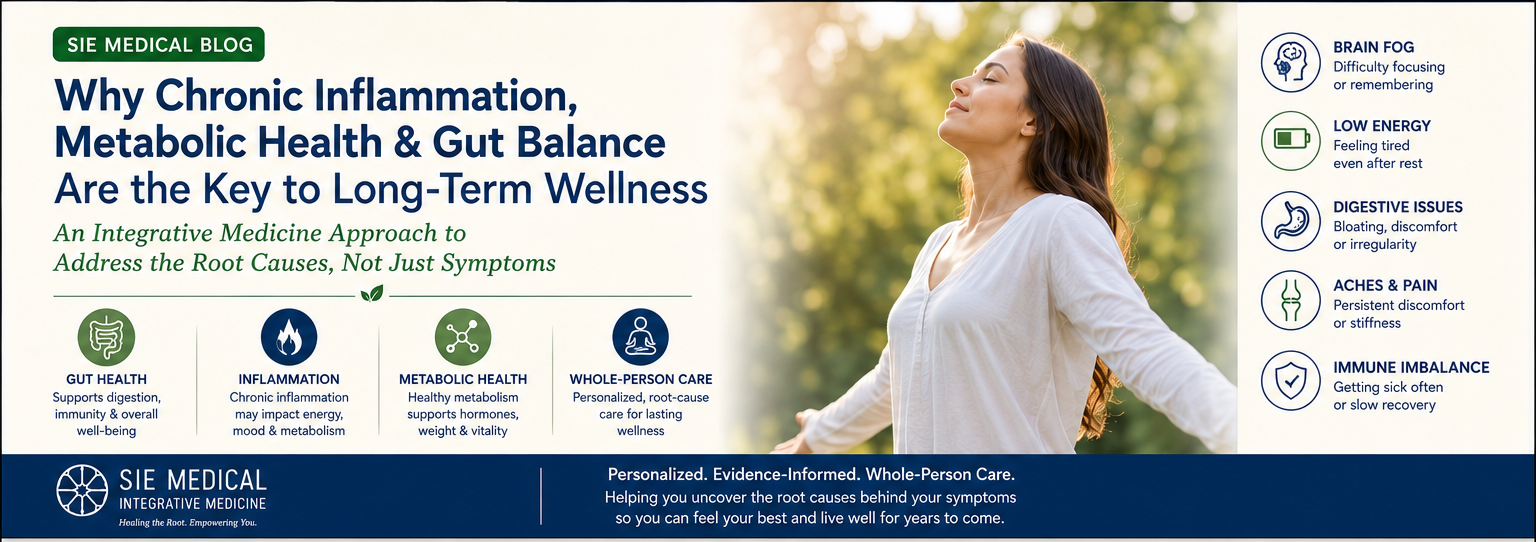
One of the biggest shifts happening in healthcare today is the growing awareness that many chronic symptoms may be connected through inflammation and metabolism.
Researchers, physicians, and healthcare organizations are increasingly discussing two important concepts:
While these terms may sound highly technical, they influence many of the symptoms patients experience every day.
Symptoms such as:
may sometimes involve interconnected systems within the body.
At SIE Medical, we believe patients deserve personalized, whole-body care that looks beyond isolated symptoms alone.
Understanding the relationship between inflammation, metabolism, immune signaling, sleep, stress, and lifestyle factors may help patients better understand why they feel the way they do.
Inflammation is a normal biological process.
When the body experiences injury, infection, or stress, the immune system responds by activating inflammatory pathways designed to help protect and heal the body.
Short-term inflammation is essential.
However, problems may arise when inflammation becomes chronic and persists for long periods of time.
This is often called:
Unlike acute inflammation, chronic inflammation may be less obvious.
Patients may not always experience visible swelling or obvious signs of illness.
Instead, they may notice symptoms such as:
Research increasingly suggests chronic inflammation may play a role in:
Immunometabolism is one of the fastest-growing areas of modern medical research.
The term refers to the close relationship between:
Researchers now understand that immune cells and metabolic processes communicate constantly.
The body’s ability to regulate blood sugar, inflammation, hormones, energy production, and immune responses are all deeply interconnected.
This means factors such as:
may influence inflammatory signaling and overall wellness.
This emerging field is changing how healthcare professionals think about chronic disease prevention and personalized medicine.
Patients today are increasingly searching online for answers to symptoms they feel have not been fully explained.
Common searches include:
Many patients feel frustrated because they experience ongoing symptoms even when routine testing appears relatively normal.
This is one reason integrative medicine and personalized healthcare approaches continue growing.
Patients increasingly want providers who:
One of the most important conversations in integrative medicine involves the gut microbiome.
The microbiome refers to the trillions of microorganisms living primarily within the digestive tract.
Emerging research continues exploring how the microbiome may influence:
Researchers increasingly describe the body as an interconnected system rather than isolated organs functioning independently.
This is why symptoms such as:
may sometimes involve multiple contributing factors.
At SIE Medical, we believe personalized care starts by understanding the whole person—not just one isolated symptom.
Another major healthcare conversation involves metabolic health.
Metabolic health refers to how efficiently the body regulates:
When metabolic function becomes impaired, patients may experience:
Researchers continue exploring how chronic inflammation may contribute to insulin resistance and metabolic dysfunction.
This growing body of research reinforces the importance of:
Modern healthcare is increasingly recognizing that lifestyle factors influence overall wellness.
This does not mean lifestyle alone explains every health condition.
However, factors such as:
may all influence inflammatory signaling and overall wellness.
Highly processed diets, excess sugar intake, and low dietary diversity may negatively affect metabolic health and inflammatory balance.
Many healthcare professionals now encourage:
Poor sleep may affect:
Sleep optimization is often an important part of personalized wellness planning.
Chronic stress may influence inflammatory pathways and nervous system regulation.
Mindfulness practices, breathing exercises, movement, and restorative habits may support stress resilience.
Movement supports:
Personalized activity plans are often important because every patient’s needs differ.
Integrative medicine focuses on combining evidence-informed lifestyle strategies with personalized healthcare.
At SIE Medical, our approach emphasizes:
Patients increasingly want healthcare that:
This shift toward personalized medicine is one of the biggest healthcare trends of the decade.
One of the most common frustrations patients express is:
“My labs are normal, but I still don’t feel well.”
Routine lab work is extremely important.
However, healthcare providers increasingly recognize that symptoms deserve attention even when standard testing does not reveal a clear explanation.
Symptoms such as:
may involve multiple interconnected factors.
This is one reason personalized medicine and systems-based healthcare models continue growing.
Healthcare is rapidly evolving toward:
Patients increasingly want providers who:
At SIE Medical, we believe education is one of the most important parts of healthcare.
Helping patients understand how inflammation, metabolism, immune function, sleep, stress, and lifestyle interact may empower more informed wellness decisions.
Our integrative approach focuses on:
We believe every patient deserves thoughtful, collaborative care designed around their individual health experience.
Whether someone is seeking support for:
we believe whole-person care matters.
Chronic inflammation refers to long-term low-grade inflammatory activity within the body. Researchers continue studying how chronic inflammation may influence metabolic health, immune signaling, cardiovascular wellness, and overall health.
Immunometabolism is the study of how metabolism and the immune system interact. Researchers increasingly recognize that inflammatory signaling, energy regulation, hormones, metabolism, and immune responses are closely connected.
Emerging research suggests chronic inflammation may influence fatigue, metabolic function, sleep quality, and energy regulation.
Many patients want healthcare approaches that consider lifestyle factors, metabolism, sleep, stress, nutrition, gut health, and whole-body wellness rather than focusing only on isolated symptoms.
Integrative medicine combines conventional medical care with evidence-informed lifestyle medicine, nutrition, stress management, and personalized wellness strategies designed to support overall health.
The growing conversation around chronic inflammation and immunometabolism reflects a major shift in modern healthcare.
Researchers increasingly recognize that metabolism, inflammation, immune signaling, gut health, stress, sleep, and lifestyle are deeply interconnected.
Patients today want healthcare that:
At SIE Medical, we believe whole-body, personalized care matters.
By combining education, lifestyle medicine, metabolic health awareness, and patient-centered care, we aim to help patients better understand the broader factors influencing how they feel day to day.