

Detoxification has become a popular health topic, but it is often misunderstood. As an integrative physician, I frequently see patients who believe detox requires extreme cleanses, fasting programs, or expensive supplements.
The reality is much more fascinating.
Your body already has a sophisticated, built-in detoxification system designed to neutralize toxins, process waste, and maintain balance. Every day, multiple organs work together to filter environmental chemicals, metabolic byproducts, hormones, and inflammatory compounds.
Understanding how the body detoxifies naturally and how to support those systems is one of the most powerful ways to improve long-term health.
This guide will explain:
What detoxification actually means
How the body detoxifies naturally
The organs involved in detoxification
Why detox pathways sometimes become overwhelmed
How to support and optimize detoxification safely
Detoxification refers to the body’s natural biochemical processes that neutralize and eliminate harmful substances.
These substances may include:
Environmental toxins
Pollutants and chemicals
Heavy metals
Hormone byproducts
Inflammatory compounds
Metabolic waste
Certain medications
The goal of detoxification is not simply removal. Instead, the body converts potentially harmful compounds into forms that can be safely eliminated through urine, stool, sweat, or breath.
In integrative medicine, detoxification is viewed as a continuous metabolic process, not a short-term cleanse.
When detox pathways function properly, the body maintains internal balance, reduces inflammation, and supports optimal cellular function.
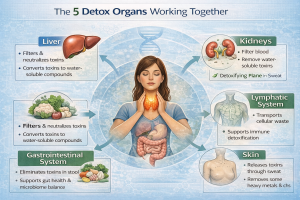
The human body relies on several organs working together in a coordinated detox network.
The liver is the most important detoxification organ.
Every minute, blood flows through the liver where toxins are processed and transformed into compounds that can be eliminated.
The liver detoxifies through two major biochemical phases:
Phase I involves enzymes that modify toxins so they can be processed further.
These enzymes, primarily the cytochrome P450 system, transform toxins into intermediate compounds.
However, these intermediates can sometimes be more reactive than the original toxins, which is why the next phase is essential.
Phase II detoxification neutralizes these intermediate compounds by attaching molecules such as:
Glutathione
Sulfur groups
Glycine
Glucuronic acid
These attachments make toxins water-soluble, allowing them to be eliminated through bile or urine.
When Phase I and Phase II detoxification become imbalanced, toxic intermediates can accumulate and contribute to inflammation and oxidative stress.
The kidneys filter approximately 50 gallons of blood each day.
Their role in detoxification includes:
Removing metabolic waste
Eliminating water-soluble toxins
Maintaining fluid and electrolyte balance
Excreting medications and metabolic byproducts
Healthy kidney function depends heavily on adequate hydration and proper circulation.
The digestive tract plays a critical role in detoxification.
The liver packages many toxins into bile, which is released into the intestines for elimination.
If digestion is slow or gut health is compromised, toxins may be reabsorbed into the bloodstream through a process called enterohepatic recirculation.
This is why gut health is fundamental to effective detoxification.
Key factors include:
Healthy microbiome balance
Regular bowel movements
Adequate fiber intake
Proper digestive function
The skin is the body’s largest organ and contributes to detoxification through sweat.
While sweating does not eliminate large amounts of toxins compared to the liver or kidneys, it does help remove:
Trace heavy metals
Certain environmental chemicals
Salt and metabolic waste
Regular physical activity and sauna therapy may enhance this process.
The lymphatic system acts as the body’s cellular waste drainage system.
It transports immune cells, metabolic waste, and inflammatory byproducts away from tissues.
Unlike the circulatory system, the lymphatic system does not have a central pump. Instead, it relies on:
Movement
Muscle contraction
Deep breathing
Sedentary lifestyles can impair lymphatic flow, allowing inflammatory compounds to accumulate.
In the modern world, humans are exposed to more environmental chemicals than ever before.
Research estimates that people encounter tens of thousands of environmental compounds, including:
Pesticides
Plastics and endocrine disruptors
Air pollutants
Heavy metals
Industrial chemicals
Additionally, lifestyle factors can impair detoxification capacity.
Common contributors include:
Poor diet
Chronic stress
Alcohol overuse
Sleep deprivation
Nutrient deficiencies
Gut dysfunction
When detoxification pathways become overwhelmed, the body may struggle to maintain metabolic balance.
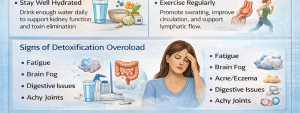
Symptoms sometimes associated with impaired detox function include:
Persistent fatigue
Brain fog
Skin issues
Hormonal imbalance
Digestive problems
Increased inflammatory symptoms
However, these symptoms are not specific and should always be evaluated in a comprehensive medical context.
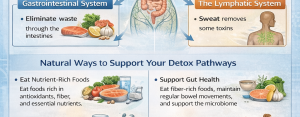
Supporting detoxification does not require extreme cleanses.
In integrative medicine, we focus on strengthening the body’s natural systems.
Below are evidence-informed ways to support detox pathways.
Detoxification requires specific vitamins, minerals, and amino acids.
A whole-food, anti-inflammatory diet provides the building blocks necessary for detox enzymes to function properly.
Key foods that support detoxification include:
Broccoli
Brussels sprouts
Kale
Cauliflower
These vegetables contain compounds that support liver detox enzymes.
Garlic
Onions
Leeks
These foods provide sulfur compounds needed for Phase II detoxification.
Fiber binds toxins in the digestive tract and supports regular elimination.
Examples include:
Vegetables
Seeds
Legumes
Whole grains (if tolerated)
Glutathione is the body’s most powerful intracellular antioxidant and plays a central role in detoxification.
It helps neutralize toxins and reduce oxidative stress.
Ways to support glutathione include:
Adequate protein intake
Sulfur-rich foods
Selenium-rich foods
Regular exercise
Some individuals may benefit from targeted supplementation under medical guidance.
Water is essential for kidney function and toxin elimination.
Adequate hydration supports:
Urinary toxin removal
Circulation
Cellular metabolism
Most adults benefit from consistent daily hydration throughout the day, though individual needs vary.
Since many toxins are eliminated through bile into the intestines, gut health directly impacts detoxification.
Strategies include:
Maintaining regular bowel movements
Consuming fiber-rich foods
Supporting microbiome diversity
Avoiding excessive processed foods
In integrative practice, addressing gut health often improves systemic inflammation and metabolic function.
Detoxification also occurs in the brain.
During sleep, the brain activates the glymphatic system, which clears metabolic waste and inflammatory compounds from neural tissue.
Poor sleep has been associated with impaired toxin clearance in the brain.
Aim for 7–9 hours of restorative sleep each night.
Physical activity supports detoxification through multiple mechanisms.
Exercise:
Improves circulation
Stimulates lymphatic flow
Promotes sweating
Enhances metabolic function
Even moderate daily movement can support these processes.
Supporting detoxification is not only about elimination — it also involves reducing exposure.
Practical strategies include:
Choosing whole foods over processed foods
Limiting exposure to plastics when possible
Using air filtration in polluted environments
Selecting personal care products with fewer chemical additives
Small changes over time can significantly reduce the body’s toxic burden.
Many commercial detox programs promise rapid toxin removal, but most are unnecessary.
Extreme cleanses may even disrupt metabolism or lead to nutrient deficiencies.
The body already has effective detoxification systems.
The goal should be to support those systems consistently through lifestyle, nutrition, and environmental awareness.
Integrative medicine focuses on sustainable, long-term strategies rather than short-term detox trends.
In some situations, targeted detoxification support may be beneficial under medical supervision.
Examples may include:
Environmental toxin exposure
Hormonal imbalance
Chronic inflammatory conditions
Certain metabolic disorders
These approaches should always be personalized and guided by qualified healthcare professionals.
Detoxification is one of the most remarkable examples of the body’s built-in intelligence.
Every day, your liver, kidneys, digestive system, skin, and lymphatic system work continuously to protect you from internal and external stressors.
Rather than forcing detoxification with extreme interventions, the most effective approach is to create an environment in which these natural systems can function optimally.
This includes:
Nutrient-dense nutrition
Healthy sleep patterns
Regular movement
Adequate hydration
Stress management
Reducing toxic exposure
When these foundational elements are in place, the body’s detoxification systems can operate as they were designed to — maintaining balance, resilience, and long-term health.