


For years, healthcare providers treated conditions like obesity, diabetes, fatigue, cardiovascular disease, and cancer as largely separate issues. Today, emerging research is revealing something important:
Chronic inflammation may act as a shared biological link connecting many chronic diseases — including metabolic dysfunction and cancer progression.
This growing area of research is changing how providers think about prevention, symptom management, metabolic health, and whole-person care.
At SIE Medical, we believe patients deserve education that helps them understand how symptoms and chronic conditions may be connected — not viewed in isolation.
Inflammation is the body’s natural defense system. When you cut your finger or fight an infection, inflammation helps the body heal.
But unlike short-term inflammation, chronic inflammation occurs when the immune system remains activated over long periods of time.
This ongoing inflammatory response may quietly influence:
Unlike acute inflammation, chronic low-grade inflammation often develops silently.
Many patients may experience symptoms for years before realizing inflammation could be contributing to how they feel.
Patients experiencing chronic inflammation may report:
These symptoms can have many possible causes, which is why individualized medical evaluation is important.
However, inflammation is increasingly being studied as a “common denominator” connecting multiple chronic symptoms and disease processes.
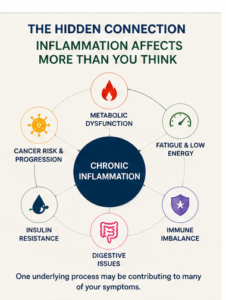 One of the biggest developments in integrative and metabolic medicine is the recognition that metabolism and inflammation are deeply interconnected.
Metabolism involves far more than body weight. It includes how the body:
When metabolic function becomes disrupted, inflammatory signaling often increases.
This can create a cycle involving:
Researchers sometimes refer to this as meta-inflammation — chronic low-grade inflammation associated with metabolic dysfunction.
Learn More: Early metabolic dysfunction: signs your metabolism may be under strain – S.I.E.M.
Adipose tissue — especially visceral abdominal fat — is not simply “stored energy.” It also functions as an active endocrine organ.
Excess visceral fat may release inflammatory signaling molecules called cytokines, including:
Over time, these inflammatory signals may contribute to:
This is one reason why providers increasingly focus on:
rather than focusing on weight alone.
One of the most important areas of current research involves the relationship between chronic inflammation and cancer biology.
Researchers are studying how inflammatory environments may influence:
Recent studies have identified overlapping inflammatory pathways active in:
This does not mean inflammation directly “causes” cancer in a simple or predictable way.
Cancer development is complex and influenced by:
However, chronic inflammation is increasingly recognized as one important factor within this broader picture.
Patients are increasingly asking:
Emerging research suggests these questions may have overlapping answers.
Instead of viewing symptoms separately, healthcare is increasingly moving toward understanding:
This shift is one reason integrative and lifestyle medicine continue growing rapidly.
Integrative medicine focuses on whole-person care rather than symptom suppression alone.
At SIE Medical, we emphasize:
✔ personalized wellness strategies
✔ metabolic health support
✔ symptom-based evaluations
✔ evidence-informed lifestyle medicine
✔ patient education
✔ supportive integrative care
The goal is not simply to “treat disease,” but to help support:
One of the encouraging aspects of inflammation research is that many contributing factors are modifiable.
 Small, sustainable habits can influence inflammatory burden over time.
Whole-food nutrition patterns emphasizing:
may help support metabolic and inflammatory balance.
Highly processed foods, excessive sugar intake, and poor dietary patterns may contribute to inflammatory signaling in some individuals.
Sleep is one of the most underestimated drivers of health.
Poor sleep quality may influence:
Many patients notice improvements in energy and resilience when sleep quality improves.
Chronic stress affects far more than mental health.
Stress may influence:
Stress-management practices such as:
may help support overall wellness.
Movement supports:
Importantly, exercise does not need to be extreme to be beneficial.
Consistent, sustainable movement often matters more than intensity alone.
The gut microbiome plays an important role in:
Patients with chronic digestive symptoms may also experience:
Another major development is the growth of integrative oncology.
Integrative oncology focuses on evidence-informed supportive care alongside conventional cancer treatment.
This may include:
The goal is not to replace conventional oncology treatment, but to support the whole person throughout the cancer journey.
Patients increasingly seek providers who can help them safely navigate supportive wellness strategies during and after treatment.
Every patient’s inflammatory burden and metabolic health profile are different.
Two patients with similar symptoms may have very different contributing factors.
That’s why personalized care matters.
At SIE Medical, we believe healthcare conversations should include:
Patients deserve care that listens carefully and looks deeper.
Healthcare is increasingly shifting toward a systems-based understanding of chronic disease.
Rather than viewing:
as entirely separate issues, providers are increasingly exploring how these systems influence one another.
This approach may help patients better understand:
Chronic inflammation is emerging as one of the most important topics in modern healthcare.
While inflammation alone does not explain every disease or symptom, research increasingly suggests it may play a meaningful role in metabolic dysfunction, chronic symptoms, and long-term wellness outcomes.
At SIE Medical, we believe patients benefit from:
✔ education
✔ personalized support
✔ evidence-informed care
✔ compassionate listening
✔ whole-person wellness strategies
Because healthcare should focus not only on disease management — but also on helping patients feel well, resilient, and supported long term.
Chronic inflammation is a prolonged immune response that may influence metabolic health, fatigue, immune signaling, and long-term wellness.
Inflammation may influence insulin sensitivity, energy production, hormone balance, and immune regulation.
Integrative oncology focuses on evidence-informed supportive care that helps address quality of life, wellness, nutrition, stress management, and symptom support alongside conventional cancer treatment.
Chronic inflammation may contribute to fatigue, brain fog, poor sleep, and low resilience by affecting immune activity and metabolism.