

Why Cancer Treatment Doesn’t Always Address the Root Causes—and What That Means for Long-Term Outcomes

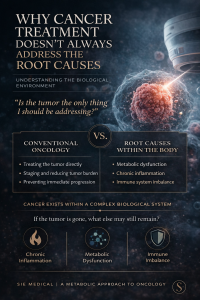
Infographic showing why cancer treatment doesn’t address root causes, comparing conventional oncology with metabolic dysfunction, inflammation, and immune imbalance.
 
Conventional cancer treatment targets the tumor, but underlying biological factors may still remain.


For many patients, cancer treatment begins quickly after diagnosis. Surgery, chemotherapy, radiation, and newer targeted therapies are designed to remove or reduce tumor burden and, in many cases, are essential components of care.

Yet even with appropriate treatment, many patients are left asking:

These questions reflect an important gap in how cancer is often approached.


Treating the Tumor vs. Understanding the Environment

Conventional oncology is highly effective at targeting cancer cells directly. Its primary focus is:

  • Identifying the type and stage of cancer
  • Reducing or eliminating tumor burden
  • Preventing immediate progression

However, cancer does not develop in isolation. It arises within a complex biological environment that may include:

  • Chronic inflammation
  • Metabolic dysfunction
  • Immune system imbalance
  • Hormonal influences
  • Cellular stress and mitochondrial dysfunction

While standard treatments focus on the tumor itself, they may not fully address the internal conditions that allowed the disease to develop and persist.


Why This Matters for Patients

Two patients with similar diagnoses may receive similar treatments—but experience very different outcomes.

This variation may be influenced by:

  • The body’s metabolic state
  • Immune system function
  • Inflammatory burden
  • Overall physiological resilience

When these underlying factors are not evaluated, important contributors to both treatment response and long-term outcomes may be missed.


The Challenge of Recurrence

One of the most difficult aspects of cancer care is recurrence.

Even after successful initial treatment, patients may face:

  • Return of the same cancer
  • Development of new disease
  • Ongoing health challenges following therapy

While recurrence is complex and multifactorial, it raises an important question:

If the tumor was treated, what underlying factors may still remain?


The Impact of Treatment on the Body

Cancer therapies can be life-saving—but they can also place significant stress on the body.

Patients often experience:

  • Fatigue
  • Immune suppression
  • Inflammation
  • Changes in metabolic function
  • Cognitive and neurological effects

Without additional support, this can impact:

  • Quality of life
  • Recovery
  • Ability to tolerate ongoing treatment

A Broader Perspective: Supporting the Whole System

A more comprehensive approach to cancer care considers both:

  1. The tumor
  2. The biological environment in which it exists

This includes evaluating:

🔬 Metabolic Function

  • Blood sugar regulation
  • Energy production at the cellular level

🔥 Inflammatory State

  • Chronic inflammatory markers
  • Oxidative stress

🛡️ Immune Function

  • Immune system balance and responsiveness

⚖️ Hormonal and Physiological Factors

  • Hormonal signaling
  • Stress response

Complementing Conventional Oncology

Integrative Oncology is not intended to replace standard oncology care—but to work alongside it.

By supporting the body more comprehensively, it may be possible to:

  • Improve tolerance to treatment
  • Reduce the impact of side effects
  • Support recovery and resilience
  • Address factors that may influence recurrence risk

From Treatment to Long-Term Strategy

For many patients, cancer care ends when treatment is completed.

However, this is often when new questions arise:

  • What should I be doing now?
  • How do I reduce the risk of recurrence?
  • How do I rebuild my health?

A systems-based approach allows for continued evaluation and support beyond initial treatment.


How This Connects to a Metabolic Approach

Understanding that cancer exists within a broader biological system provides the foundation for a metabolic and integrative approach.

Rather than focusing solely on the disease, this approach considers:

  • The internal environment
  • The drivers of dysfunction
  • Opportunities to support the body more effectively

👉 This perspective builds on the understanding that:
what is happening within the body may influence both the course of disease and recovery.


When to Consider a More Comprehensive Approach

You may benefit from a broader evaluation if you:

  • Have undergone treatment but still have unanswered questions
  • Are concerned about recurrence
  • Are experiencing ongoing symptoms after therapy
  • Want to better understand the factors influencing your condition
  • Are looking for ways to support your body during treatment

Our Approach at SIE Medical

At SIE Medical, we take a systems-based, root-cause approach to complex conditions, including cancer.

We work to identify:

  • Underlying metabolic and inflammatory drivers
  • Areas of immune and physiological imbalance
  • Opportunities to support the body alongside conventional care

Our goal is to provide a complementary framework that supports both:

  • Clinical outcomes
  • The overall health and resilience of the patient

Requesting a Consultation

If you are navigating cancer treatment or seeking a more complete understanding of your condition, a comprehensive evaluation may provide additional insight.

You can request a consultation to determine whether this approach is appropriate for your situation.